

Introduction
If you’ve typed “Crackstube” into a search bar recently, you’ve probably noticed something odd: the results don’t agree with each other. One page calls it a professional online publishing platform. Another calls it a portal for pirated software and streaming links. A third insists it’s neither of those things and accuses “third parties” of spreading misinformation. That’s not a coincidence, and it’s not you misunderstanding something simple — it’s a genuine case of one name being used for very different things at the same time.
This article walks through where the name comes from, why it causes so much confusion, what the self-described official platform claims to be, what the wider internet actually associates with the term, and how to protect yourself regardless of which version you happen to land on.
Where the Name Comes From

The word itself is a combination of two very recognizable internet terms. “Crack,” in tech slang, refers to software that’s had its license verification removed so it can run without payment. “Tube,” ever since a certain video site made the suffix famous, has become internet shorthand for any site built around organizing and sharing media or content in bulk.
Put those two ideas together and you get a name that sounds, on its face, like a hub for free digital content — software, videos, or both. That’s exactly why the name has been picked up by such different kinds of websites: it’s catchy, it’s search-friendly, and it implies “free access” without anyone having to explain further.
Two Very Different Things Sharing One Name
Here’s the part that actually matters if you’re trying to make sense of your search results.
Crackstube explained in its narrowest sense refers to crackstube.com, a site that describes itself as a digital media platform and content publishing hub. According to its own about page, it functions as a guest posting website — meaning businesses, marketers, and writers can submit articles and, in return, get published links back to their own sites. Its self-description leans heavily on categories like technology, finance, business, and education, positioning it as a technology blog and business content destination rather than anything related to downloads.
Separately, “Crackstube” is used — often on completely unrelated domains — as a generic label for the kind of site that lists cracked software, keygens, pirated movies and shows, or “premium” app downloads. These sites tend to look similar to each other: aggressive ad placement, multiple download buttons, and content that isn’t hosted on their own servers but linked out to third parties.
Because both usages exist simultaneously, and because copycat domains regularly appear and disappear, search engines end up mixing results from both worlds. That’s the confusion you’re seeing.
Crackstube’s Own Description of Itself
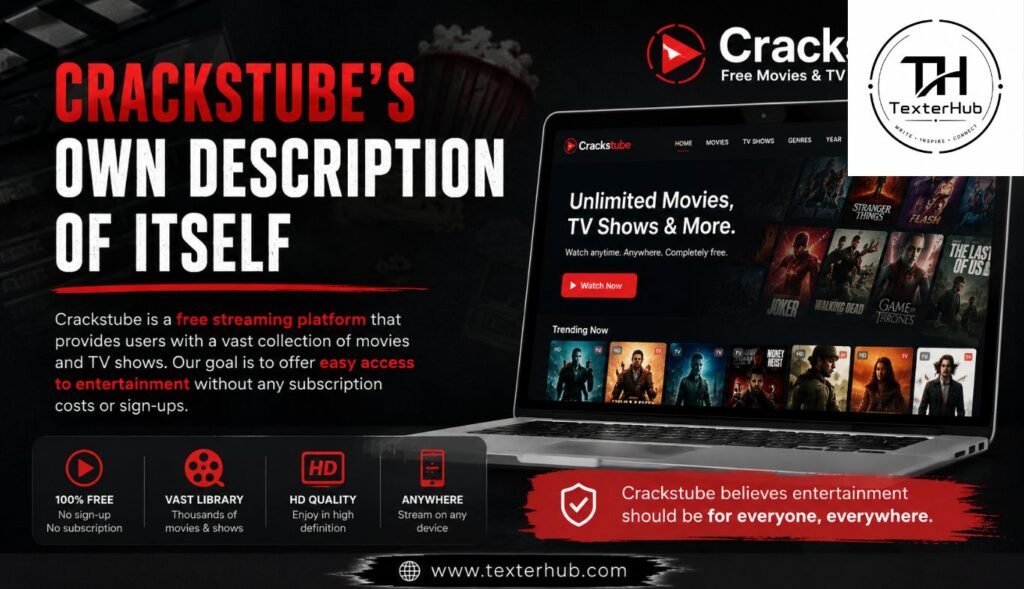
Worth noting up front: everything in this section reflects claims made by the site about itself, not independent verification.
The platform’s own pages describe its Crackstube purpose as solving what it calls a common internet problem — too much low-value content and not enough clarity. It positions itself as a digital knowledge hub that pulls together several subject areas instead of narrowing into one niche.
Crackstube Content Categories
By its own listing, the site organizes material into a handful of recurring categories:
Technology coverage sits alongside finance articles and educational articles, giving the platform a broad, general-interest feel rather than a single specialty. Business-focused pieces round things out, aimed at readers who want practical, industry-relevant information rather than entertainment news.
There’s also a lifestyle blog component, covering everyday topics that don’t fit neatly into the more technical categories. Real estate, law, and home improvement pieces show up as well, according to the platform’s own category listings — which is a fairly wide net for a single web portal to cast.
How Crackstube Works, According to the Platform
The basic pitch is straightforward: readers browse and read articles without needing to register an account, and contributors can submit content through a guest-posting system. If a submission is accepted, the contributor typically gets a published link back to their own site — a fairly standard arrangement for this type of article directory.
The platform’s own materials describe this as beneficial for search engine visibility, framing itself as part of SEO resources for marketers who want backlinks from a site that at least presents itself as topic-relevant rather than as an obvious link farm.
Crackstube Technology Articles and Other Subject Coverage
Coverage in the technology section, per the site’s own listings, touches on general consumer tech trends, software topics, and internet culture. The Crackstube business guides angle focuses on practical operational advice — the kind of content aimed at small business owners or marketers looking for straightforward how-to material rather than deep investigative reporting.
Crackstube educational resources and Crackstube finance content round out the more “serious” categories, while the Crackstube lifestyle content section leans into softer, everyday reading. None of this is unusual for a general-interest content hub — it mirrors a format used by countless mid-sized publishing sites.
Crackstube’s Guest Posting Model
This is arguably the clearest and most consistent part of the platform’s identity across its own pages. Crackstube frames itself less as a traditional online resource for casual readers and more as a service for people doing search engine optimization work.
Crackstube Guest Posting in Practice
According to its own “about” page, the process works like a fairly typical guest posting platform: a user browses available sites in the network, picks one that matches their niche and budget, submits an article, and — once approved — receives a live backlink. Pricing reportedly varies by a site’s authority and traffic, which is standard practice across the guest-posting industry generally.
The platform states it supports customized anchor text and target URLs, catering directly to marketers who need specific link placements for campaigns. Whether any individual link genuinely helps a given site’s rankings depends on far more than just getting published — search engines evaluate relevance, site quality, and pattern of link acquisition, not just the existence of a backlink.
Crackstube Editorial Platform Claims
The site also positions itself as an editorial platform, implying some level of review before content goes live rather than accepting anything submitted. Whether that review is rigorous, superficial, or largely automated isn’t something that can be confirmed from the outside — it’s simply the claim being made.
Crackstube Website Review: What to Actually Weigh
If you’re evaluating whether to use crackstube.com for guest posting, publishing, or reading, a few practical questions matter more than the marketing copy.
Does the site have a genuine reader base beyond people submitting content for links? Are the articles well-written and useful on their own merits, or do they read as filler built purely to host outbound links? Is there a real editorial process, or does everything submitted appear to go live automatically? These are the same questions worth asking of any guest posting website before paying for placement or trusting its content as a reader.
It’s also worth noting that a number of near-identical descriptions of “Crackstube” appear, nearly word-for-word, across multiple unrelated domains — a pattern common among networks of affiliated content sites rather than a single independent publication. That doesn’t automatically make the information false, but it’s a reasonable signal to treat any single glowing description with a bit of healthy skepticism.
Crackstube’s Online Presence and the Naming Dispute
Multiple pages tied to the crackstube.com domain go out of their way to state that theirs is the “only official” site and that other descriptions circulating online — ones associating the name with piracy, adult content, or gambling — are inaccurate and unauthorized. That’s a notable thing for a content platform to feel it needs to clarify repeatedly.
At the same time, independent write-ups from unrelated outlets consistently describe “Crackstube” as a general term covering unofficial sites that distribute cracked software and pirated media, unconnected to any single company, appearing and disappearing across domains as older ones get taken down.
Both things can be true simultaneously: a legitimate-sounding site can exist under this name, while the term itself remains widely recognized elsewhere as shorthand for piracy hubs. That’s precisely why so many “what is Crackstube” explainer articles exist in the first place — the confusion itself became a topic worth writing about.
Crackstube Platform Overview: What It Is Not
According to its own official statements, the platform explicitly denies any connection to adult content, gambling services, or illegal material distribution. It states it doesn’t function as a streaming service, entertainment hub, or download platform, and that browsing doesn’t require sensitive personal information, downloads, or payment.
That last point is a genuinely meaningful distinction if accurate: a site that only serves readable articles carries a fundamentally different risk profile than one that hosts or links to downloadable software and media files.
Why the Other Meaning Matters More for Your Safety
Even if crackstube.com itself is exactly what it claims to be, the broader “Crackstube” ecosystem — the collection of unrelated sites using the same name for cracked software and pirated media — is the version most people should be cautious about, simply because it’s the more common association and the one carrying real risk.
How Those Sites Typically Operate
Unofficial platforms using this kind of name rarely host files on their own servers. Instead, they act as link directories, pointing visitors toward third-party file-hosting services or streaming pages, often through a chain of redirects. This setup lets the operators distance themselves from whatever content actually gets delivered, since the files themselves live elsewhere.
Revenue for these sites typically comes from aggressive advertising, pop-ups, and affiliate-style download buttons — sometimes several on a single page, styled differently to nudge visitors toward whichever link pays the most, regardless of whether it matches what the visitor actually searched for.
The Real Risks Involved
Security researchers have repeatedly documented that cracked installers and keygens are a common way malware, spyware, and credential-stealing tools get onto people’s devices. A file labeled as a software crack or media player can easily be something else entirely, and there’s rarely any meaningful vetting process behind these download links.
Beyond malware, there are privacy risks from tracking scripts, fingerprinting, and ad-tech profiling that can build a surprisingly detailed picture of a visitor’s browsing habits just from repeated exposure to these sites. And separate from the technical risks, downloading or streaming pirated software and media raises straightforward copyright and legal exposure — the severity depends on your country and what exactly you’re doing, but it’s a real consideration, not a hypothetical one.
Practical Guidance If You’re Trying to Sort This Out
If your goal is reading general-interest articles, verify you’re on the actual intended domain before trusting any content, and treat overly repetitive “official platform” language with mild skepticism — it’s often a sign of a content network rather than an independent site.
If what you’re actually looking for is free software or media, it’s worth remembering that legitimate free alternatives exist for most common needs: open-source software often covers the same functionality as paid tools, and many streaming services offer free ad-supported tiers. Neither carries the malware or legal exposure that comes with cracked downloads.
And if you arrived here simply trying to understand a confusing search result, the short version is this: treat “Crackstube” as a keyword with two very different meanings attached to it, not as a single verified brand — and apply ordinary internet caution to whichever version you happen to encounter.
The Bigger Picture: Why Names Like This Get Recycled
This pattern isn’t unique to Crackstube. Plenty of catchy, download-implying names get reused across unrelated sites precisely because the naming itself drives search traffic. A web portal built on a trending keyword can attract visitors regardless of what’s actually behind it, which is exactly why due diligence matters more than the name on the door. Whether you’re evaluating it as an informational website, weighing it as a place to submit a guest post, or just trying to figure out why your search results are contradicting each other, the same rule applies: judge the specific page in front of you, not the brand name it’s borrowing.
Bottom Line
“Crackstube” isn’t a single, settled thing — it’s a name attached to at least two very different corners of the internet. One is a self-described online publishing platform built around guest posts and general-interest articles. The other is a loose, ever-shifting label for piracy-adjacent sites that carry real security and legal risk. Knowing which one you’re actually dealing with — and staying skeptical of confident claims either way — is the most useful thing you can take from this whole conversation.
Conclusion
At the end of the day, “Crackstube” is a good example of how a single catchy name can end up meaning almost opposite things depending on where you land. On one side, there’s a site presenting itself as a legitimate content publishing and guest posting website, built around articles across technology, finance, business, and lifestyle topics. On the other, the same name gets used loosely across the internet to describe unofficial, piracy-adjacent sites with real security and legal downsides.
Neither version deserves blind trust just because of the name attached to it. The smarter approach is to judge whatever specific page you’re actually looking at — checking for real editorial quality, transparency about who runs it, and whether it asks you to download anything or hand over personal details — rather than assuming the brand name settles the question for you. If you keep that habit in mind, you’ll navigate confusing, keyword-driven corners of the internet like this one a lot more safely, whether you came across Crackstube out of curiosity, for research, or while looking for a place to publish.
FAQs
What is Crackstube?
Crackstube is an adult content website that has been known for offering free access to explicit videos and related material online.
Is Crackstube free to use?
Yes, the platform has generally been promoted as a free website where users can browse content without paying subscription fees.
Is Crackstube safe to visit?
Users should exercise caution, as free adult websites may contain intrusive ads, pop-ups, or potential security risks.
Is Crackstube legal?
The legality depends on your country’s laws and whether the content is properly licensed and complies with local regulations.
Does Crackstube require an account?
In many cases, users can view content without creating an account, though some features may require registration.
Can Crackstube be accessed on mobile devices?
Yes, the website is generally accessible through smartphones, tablets, and desktop browsers.