


Introduction
Most people who search for Michael Tell aren’t looking for him specifically. They’re trying to untangle a stranger, older story: how actress Patty Duke ended up married for less than two weeks to a man most of Hollywood had never heard of, and how that marriage turned out to be connected to the real parentage of Sean Astin, the actor known for The Goonies and The Lord of the Rings. Michael Tell’s own life was lived almost entirely outside the spotlight, which is exactly why his name keeps resurfacing decades later, attached to a family mystery he never asked to be part of.
What follows is a full look at that story — what’s actually documented about Michael Tell, the context that explains why the marriage happened the way it did, how the paternity question was eventually settled, and where the public record simply runs out. Michael Tell It’s worth saying upfront that a lot of what circulates about him online doesn’t hold up under scrutiny, and part of doing this properly is being honest about that rather than repeating numbers and dates that nobody can actually source.
Who Was Michael Tell
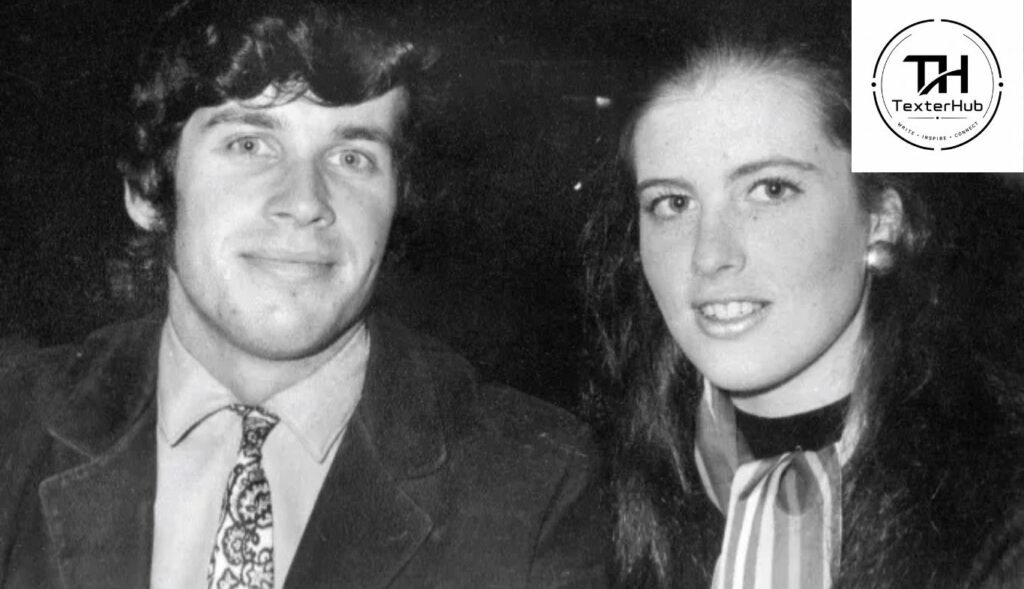
Michael Tell was an American music promoter, and later a small newspaper publisher, whose name became attached to entertainment history mostly through a single event: a very short marriage to Patty Duke in the summer of 1970. He wasn’t an actor, wasn’t a public figure by trade, and didn’t build any kind of media career off the marriage afterward. Michael Tell That distinction matters, because it explains why so little verified information about him exists. He simply didn’t leave much of a public trail to follow, and nobody was documenting his life the way they document the lives of working actors or musicians.
Various later write-ups describe him as being born around 1950 in the United States, with Austrian Jewish and Polish Jewish ancestry on his side of the family. Michael Tell That ancestry detail is one of the few personal facts about him that shows up in a genuinely reliable source, since it’s mentioned in connection with Sean Astin’s own background rather than in a stand-alone profile of Tell.
Beyond that, solid, independently verifiable biography details — his parents’ names, his siblings, his hometown, where he went to school — were never published anywhere trustworthy. Sites that claim to know his exact height, his childhood, or a precise net worth are, frankly, guessing, and several contradict each other outright, which is usually a sign that none of them actually know and are simply filling in blanks to look complete.
Early Career: Life as a Music Promoter
By the time he crossed paths with Patty Duke, Michael Tell Tell was already working in the music business. He’s consistently described as a rock music promoter, active in the industry during a period — the late 1960s and early 1970s — when rock promotion was shifting away from small, regional shows run by local operators into a much bigger, more organized business tied to record labels, touring circuits, and national press coverage. Promoters in that era handled the unglamorous logistics behind concerts and tours:
booking venues, negotiating with acts, arranging advertising, and managing the ticket side of a show. It wasn’t a job that put a person’s name in lights, which fits the pattern of someone who spent decades adjacent to entertainment without ever becoming a public figure himself.
He’s also referenced in some accounts as a writer and, later, as the publisher of a Las Vegas-based newspaper. Michael Tell That combination — promotion, writing, small-scale publishing — fits with a life spent working the business and media side of entertainment rather than performing in front of an audience. It’s a plausible, coherent career picture, even if the specific outlets and publications involved were never widely reported at the time.
There’s no evidence he pursued a career in front of the public afterward: Michael Tell no acting credits, no interviews explaining his side of what happened with Duke, and no autobiography or memoir laying out his own version of events. Everything about his career points to someone who worked behind the scenes and stayed there, by choice, for the rest of his life.
Patty Duke Before the Marriage
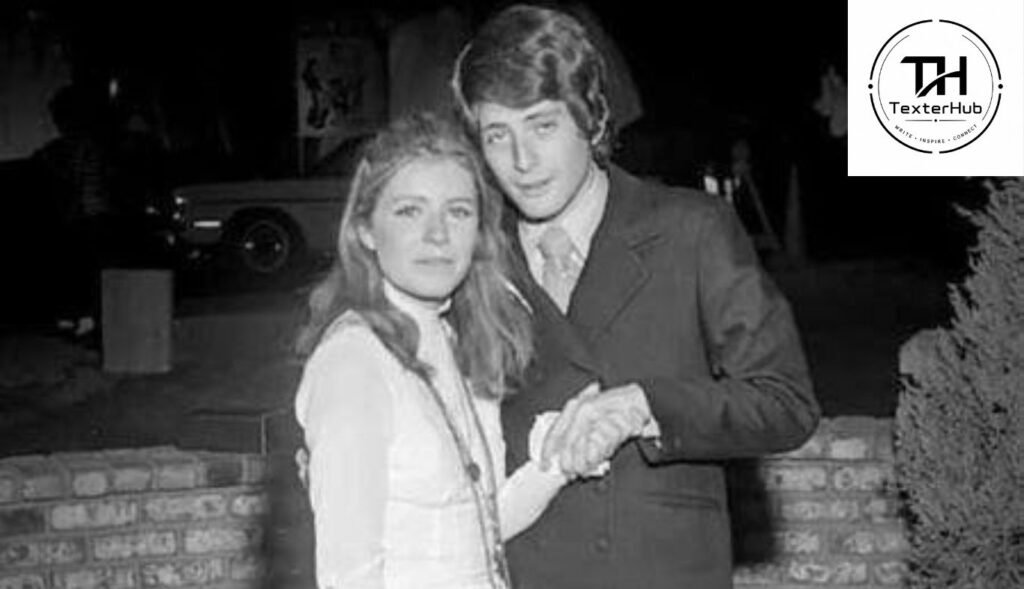
To understand why the marriage to Michael Tell happened the way it did, it helps to know where Patty Duke was in her own life in 1970. Michael Tell She’d been a working actress since childhood, discovered young and pushed hard by managers who, by her own later account, controlled nearly every part of her life and finances.
She won an Academy Award at sixteen for playing Helen Keller in The Miracle Worker, having already originated the role on Broadway, and went on to headline her own sitcom, The Patty Duke Show, which ran for three seasons starting in 1962. By her early twenties she’d also taken on adult, darker roles, most notably as Neely O’Hara in the 1967 film adaptation of Valley of the Dolls.
What almost nobody around her understood at the time was that she was dealing with an undiagnosed mental illness. Duke wasn’t formally diagnosed with bipolar disorder — then called manic depression — until 1982, more than a decade after her marriage to Tell. Michael Tell In the years before that diagnosis, she experienced periods of mania and severe depression with no name attached to them and no consistent treatment.
The public got its first real glimpse of this in 1970, the same year she married Tell, during a rambling, disjointed Emmy acceptance speech that led to speculation she was under the influence of drugs. She later explained that she hadn’t slept in three weeks leading up to that broadcast, and that the speech was a symptom of an illness nobody, including her, understood yet.
That context matters because Duke herself pointed to it directly when she talked about the marriage later in life. Michael Tell She described the relationship with Michael Tell as something she entered during an unstable, emotionally chaotic period rather than a settled or considered decision, and it’s a claim that lines up with everything she wrote and said publicly about that entire stretch of her life once she understood what she’d actually been living with.
The Marriage to Patty Duke
This is the part of Michael Tell’s story that actually is well documented, mostly because Patty Duke spoke about it herself in later interviews and in her memoirs. The two met at a restaurant and, by most accounts, only dated on and off for a short time before marrying. On June 26, 1970, they married at the Little Church of the West in Las Vegas, a chapel that had already built a reputation as the go-to venue for fast, low-ceremony celebrity weddings. The marriage lasted thirteen days before Duke sought an annulment, which was finalized shortly after.
Duke was candid, later in life, that the marriage wasn’t built on a settled relationship. She’d recently gone through a difficult breakup and was, as described above, dealing with an undiagnosed illness that was actively shaping her decision-making at the time. She described the marriage as impulsive, something she entered during a low point rather than a decision made with any real clarity. Tell, for his part, never gave interviews contradicting or elaborating on her account of any of it. He simply didn’t comment publicly, then or later, which is consistent with everything else known about how he handled his own privacy for the rest of his life.
By the time the marriage was annulled, Duke was already pregnant. That pregnancy, and the uncertainty around it, is what tied Michael Tell to Hollywood history for good, even though almost nobody would remember him individually otherwise.
A Pregnancy With No Certain Answer
Before her brief marriage to Tell, Patty Duke had been in a relationship with entertainer Desi Arnaz Jr., the son of Lucille Ball and Desi Arnaz. That relationship had drawn tabloid attention of its own, partly because of the age gap involved and partly because Lucille Ball reportedly opposed it. When Duke became pregnant around the time her relationship with Arnaz Jr. was ending and her brief marriage to Tell was beginning, she genuinely didn’t know which of the two men was the father. It wasn’t a secret kept from the public that later came out — it was a question Duke herself couldn’t answer at the time.
That uncertainty didn’t get resolved quickly, either. Sean was born Sean Patrick Duke on February 25, 1971, in Santa Monica, California, less than a year after his mother’s marriage to Tell had already come and gone. For years, both mother and son operated on incomplete information. When Sean was fourteen, Duke told him she believed his biological father was Desi Arnaz Jr. — not Michael Tell, and not the man who had actually raised him. Sean grew up believing that, and it shaped how he understood his own family well into adulthood.
John Astin Enters the Picture
In 1972, less than two years after her marriage to Tell ended, Patty Duke married actor John Astin, best known at the time for playing Gomez Addams on the original The Addams Family television series. Astin adopted Sean shortly afterward, and Sean took his surname, the name he’s carried throughout his entire acting career. The couple went on to have a son together, Mackenzie Astin, born in 1973, who also became an actor.
John Astin raised Sean from early childhood and has always been described, by both men, as Sean’s real father in every sense that matters outside of biology. Astin has been on record saying that genetics never changed how he felt about his son, telling one interviewer that the greatest treasures are treasures of the heart. Duke and Astin’s marriage itself didn’t last — they divorced in 1985, after Astin’s conversion to Buddhism became a point of tension in the family — but the two remained close, and by Duke’s own account there was real affection between them even after the marriage ended, alongside real friction that made day-to-day life difficult.
Sean Astin, the DNA Test, and an Unresolved Question That Got Answered
The paternity question that had followed Sean since before he was born wasn’t settled until the 1990s, when he was already an adult with a growing acting career. A relative of Michael Tell’s got in touch with Sean and mentioned that they might be related, which prompted Sean to arrange a DNA paternity test involving all three men who’d been candidates at different points in his life: John Astin, Desi Arnaz Jr., and Michael Tell. The results were conclusive. Michael Tell, not Arnaz Jr. and not the father who’d raised him, was his biological father.
Sean has spoken about this publicly a number of times since, most memorably telling PEOPLE magazine in 2001, “John Astin is my father, Michael Tell is my biological father.” In a separate interview with ABC, he described being able to call any of the men in his life whenever he wanted, referring to them collectively as his “four dads,” a group that also included his mother’s fourth husband, Michael Pearce. He’s described Arnaz Jr.
as being like a godfather to him, someone he loves deeply even though science eventually ruled him out, and he’s spoken with real warmth about building an actual relationship with Tell once the results came back, calling him “a great guy” that he’d become friendly with.
That’s really the heart of why Michael Tell is remembered at all: not for anything he did publicly, but for a genetic connection nobody expected and a family that chose to handle it with unusual grace on all sides, rather than turning it into the kind of scandal it easily could have become.
Sean Astin’s Career, In Brief
Because so much of Michael Tell’s public relevance is tied to his son, it’s worth laying out who Sean Astin actually became, since it explains why this decades-old paternity story still gets attention at all. Astin started acting as a child, appearing alongside his mother in the 1981 after-school special Please Don’t Hit Me, Mom at age nine. His feature film debut came a few years later in Steven Spielberg’s The Goonies (1985), where he played Mikey Walsh, the group’s determined young leader — a role that made him recognizable to an entire generation of moviegoers.
He built a steady career through the following decade, including a well-remembered turn in Toy Soldiers (1991) and the title role in Rudy (1993), a biographical sports drama that’s still regularly cited as one of his most respected performances. He also moved into filmmaking during this period, directing a short film called Kangaroo Court in 1994 that earned an Academy Award nomination for Best Live Action Short Film — notably, in the same category his adoptive father John Astin had been nominated in decades earlier.
Astin’s biggest career turn came with Peter Jackson’s The Lord of the Rings trilogy (2001–2003), in which he played Samwise Gamgee, a performance widely considered one of the trilogy’s emotional anchors and one that brought him a new level of international recognition. He’s continued working steadily since, including a well-received role as Bob Newby in the second season of Stranger Things, along with voice work, producing, directing, and writing, including a New York Times best-selling memoir about his experience filming The Lord of the Rings.
None of that career had anything to do with Michael Tell directly. But it’s the reason a private man’s brief, decades-old marriage keeps getting written about: because the son connected to it became famous enough that people want to understand the full picture of where he came from.
Michael Tell’s Personal Life After the Marriage
After the annulment, Michael Tell essentially disappears from the public record for decades. There’s no indication he remarried, no reports of other high-profile relationships, and no evidence he sought any kind of public role connected to Duke or, later, to Sean Astin’s fame. Once the DNA results became known in the 1990s, he and Sean did build some kind of relationship — Sean has referred to being able to call him, along with the other father figures in his life, whenever he wanted — but Tell himself stayed out of interviews and media coverage even after his name became relevant to one of Hollywood’s more talked-about family stories.
This pattern holds for basically his entire life after 1970: no memoir, no talk-show appearances, no social media presence that anyone has been able to verify, and nothing resembling a public personal life narrative. It’s worth being straightforward here rather than inventing detail:
there is no reliable, sourced information available about a Michael Tell Instagram account, a Michael Tell Wikipedia page, or verified figures for his height, physical appearance, or net worth. Several low-quality sites publish specific numbers for these — down to exact dollar amounts and precise ages — but none of them cite an actual source, and the figures contradict each other from site to site, which is a strong signal they’re invented rather than researched. A responsible article shouldn’t repeat numbers like that just because they’re easy to find; easy to find isn’t the same as true.
What’s fair to say is this: Tell worked for years in the music and publishing world, avoided fame deliberately even when he had every opportunity to cash in on his connection to two well-known families, and by all accounts lived a quiet, private life for the rest of his years, with some later reporting indicating his death occurred in 2025, though even that detail hasn’t been confirmed by any outlet with the kind of sourcing that would make it fully reliable.
Why the Marriage Was So Short
Thirteen days is short even by the standards of Las Vegas quickie weddings, and it’s worth sitting with why. The Little Church of the West, where they married, had already become famous by 1970 for exactly this kind of fast, informal ceremony — it’s the same chapel associated with a number of other short-lived celebrity unions over the decades, precisely because it offered speed and privacy over spectacle. That venue choice alone tells you something about the nature of the relationship: this wasn’t a wedding built around months of planning or public announcement, it was a decision made quickly, by two people who barely knew each other in any deep sense.
Duke’s own explanation, offered years later once she understood the illness she’d been living with, was that she married during a manic or emotionally volatile stretch, looking for stability or escape rather than entering a relationship she’d thought through. Whether Tell understood the extent of what she was dealing with at the time isn’t something either of them addressed publicly — he never gave his side of it in any documented interview — but the short timeline of the marriage, and the fact that neither party seemed to fight the annulment, suggests it was a mutual recognition that the marriage had been a mistake almost as soon as it began.
The Family’s Approach to a Complicated Story
What stands out, looking at this story as a whole, is how little conflict came out of it publicly. Paternity surprises involving multiple men and a famous family are, in a lot of cases, the kind of thing that ends up in court, in tabloids, or in bitter public statements. That’s not what happened here.
John Astin has spoken about Sean with nothing but warmth, regardless of the DNA results. Sean has spoken about all three men connected to his biological story — Arnaz Jr., Astin, and Tell — with genuine affection rather than resentment toward any of them, and has been explicit that he doesn’t fault his mother, his biological father, or the man who raised him for how any of it unfolded.
Patty Duke, for her part, used her platform in later years to talk openly about the mental illness that shaped so many of her personal decisions during that period, including the marriage to Tell, rather than downplaying or hiding it. She became a mental health advocate after her 1982 diagnosis, writing two books about her experience — Call Me Anna in 1987 and A Brilliant Madness: Living With Manic-Depressive Illness in 1992 — and spoke to Congress twice about funding for mental illness research.
She was also elected president of the Screen Actors Guild, serving from 1985 to 1988, alongside that advocacy work. Her willingness to be honest about the chaos of that period, including a marriage that lasted less than two weeks, is arguably why the public has as much context about Michael Tell as it does at all — without her openness, this would likely be an entirely forgotten footnote.
Why This Story Still Gets Searched
Part of what keeps people curious about Michael Tell is the sheer unlikeliness of the whole sequence of events: a thirteen-day Las Vegas marriage, a pregnancy nobody was sure about, a mother who told her son the wrong answer for over a decade in good faith, and then a DNA test in the 1990s that quietly rewrote a very well-known actor’s understanding of his own family. It’s a genuinely unusual footnote in Hollywood family history, and it involves people the public already knew — Patty Duke, John Astin, Desi Arnaz Jr. — plus one person, Tell, who never wanted to be part of any of it and never treated his connection to Duke or Astin as anything to publicize.
It also says something that the family didn’t turn this into a scandal. Sean Astin has spoken warmly about all the men in his life rather than picking sides, and John Astin has been on record saying genetics never changed how he felt about being Sean’s father. That’s a more interesting ending than most tabloid stories get, and it’s probably the real reason this keeps getting revisited every few years: not because of who Michael Tell was as a person, since so little about him is actually known, but because of how the people around him handled an extraordinary situation with more maturity than the circumstances required.
Separating Fact From Filler
It’s worth pausing on something that becomes obvious the moment you actually try to research Michael Tell in depth: a lot of what’s published about him online is recycled from a handful of low-effort articles that copy each other’s claims without ever citing where those claims came from.
Several sites list a precise net worth for him, sometimes with different figures on different pages. Others describe a childhood, siblings, or a family business with no source at all. A few claim he died on a specific date in 2025 with no obituary, statement, or news report backing it up. One site describes his ethnicity one way, another describes it differently, and neither one explains how they arrived at that conclusion.
None of that is meant as a criticism of anyone curious about him — it’s a completely reasonable thing to want to know. It’s more a caution about how quickly thin source material gets treated as settled fact once enough websites repeat it. The genuinely reliable information about Michael Tell comes almost entirely from people around him who were willing to talk: Patty Duke’s own account of their marriage, and Sean Astin’s account of learning who his biological father actually was. Outside of that narrow, well-documented window, Michael Tell simply chose not to be known, and that choice is arguably the most consistent, well-supported fact about him there is.
The Larger Pattern: Quickie Vegas Weddings in Old Hollywood
Michael Tell and Patty Duke’s marriage wasn’t an isolated oddity — it fit into a much broader pattern of celebrity behavior that Las Vegas actively cultivated for decades. Nevada’s short waiting periods and minimal paperwork requirements made it the easiest place in the country to get married on short notice, and chapels like the Little Church of the West built their entire business model around that convenience. For a public figure dealing with tabloid attention, personal instability, or simply a desire to avoid a drawn-out engagement process, a Las Vegas wedding offered privacy and speed that a traditional ceremony never could.
That convenience cuts both ways, though. The same speed that makes a Vegas wedding appealing also makes it easy to enter without the kind of deliberation a longer engagement forces on a couple. Duke’s own explanation of her marriage to Tell — that it happened during an emotionally volatile period, without much real courtship behind it — is a pattern that shows up again and again in stories about quickie Vegas unions between people who barely knew each other. It doesn’t make the marriage unique so much as a particularly well-known example of something that happened to a lot of people during that era of Hollywood, most of whom didn’t have a famous son to keep the story alive decades later.
The History Behind DNA Paternity Testing in the 1990s
It’s worth putting the timing of Sean Astin’s paternity test into context, because it explains why this question sat unanswered for so long in the first place. Reliable DNA-based paternity testing wasn’t widely accessible to the general public until the late 1980s and early 1990s. Before that point, paternity disputes were typically handled through blood-type comparisons, which could rule a man out but couldn’t confirm paternity with anything close to certainty. That’s a large part of why a question like Sean’s — who was actually his biological father — could remain genuinely unresolved for more than two decades after his birth in 1971.
By the time DNA testing became accurate and accessible enough for ordinary families to use it, Sean Astin was already an adult, established in his acting career, and in a position to seek out the answer on his own terms rather than have it forced on him by a lawsuit or a tabloid story. That’s an important distinction from a lot of celebrity paternity stories, which tend to surface through legal disputes or media investigations.
This one surfaced because a relative reached out privately, and Sean chose, on his own, to find out for certain. The fact that the answer came from a scientific test rather than a guess or a family rumor is also why the outcome has held up without dispute in the years since — there was no ambiguity left once the results came back, unlike the uncertain, conflicting claims that had circulated for the better part of two decades before that.
Conclusion
Michael Tell was never a public figure by choice, and that’s really the throughline of his entire story. He spent his working life as an American music promoter, married Patty Duke for a brief and unsettled thirteen days in 1970, and then went back to a private existence that he never tried to leverage, even after a DNA test decades later revealed he was Sean Astin’s biological father. He gave no tell-all interviews, chased no headlines, and left the explaining to the people around him — Duke, John Astin, and eventually Sean himself.
If you’re looking for a tidy biography — birthplace, schooling, family tree, an exact net worth — that information largely doesn’t exist in any reliable form, and it’s worth being skeptical of any site that states those details with suspicious precision. What can be said with confidence, based on genuinely reported sources, is this: he worked in music promotion in the early 1970s, his marriage to Patty Duke was brief and impulsive during an unstable period in her life, and a paternity test in the 1990s confirmed him as Sean Astin’s biological father, a role he accepted quietly rather than publicly. Everything beyond that is speculation dressed up as biography.
The real version of Michael Tell’s story is smaller and less tidy than the invented ones circulating online, but it’s also more human — a private man who ended up, almost by accident, at the center of a Hollywood family story he never asked to be part of, and who let the people who did want to talk about it tell it in their own words instead of his.
FAQs
How old was Michael Tell?
Later reporting places his birth around 1950, though no fully verified public record confirms an exact date. If that estimate is accurate, he would have been around 20 when he married Patty Duke in 1970.
What was Michael Tell’s profession?
He worked as a rock music promoter in the late 1960s and early 1970s, with some accounts also describing him as a writer and a newspaper publisher later in his career.
Was Michael Tell married more than once?
There’s no documented evidence that he remarried after his annulment from Patty Duke. Public information about any other relationships he may have had simply doesn’t exist.
Does Michael Tell have other children?
No reliable source documents any children beyond Sean Astin, though given how private his life remained, that absence of information isn’t the same as confirmation either way.
What is Michael Tell’s net worth?
There’s no verifiable figure. Numbers published on various sites conflict with each other and cite no source, which is a strong indication they were estimated rather than researched.
Is there a Michael Tell Wikipedia page?
Not a standalone one with verified sourcing. What’s known about him is largely folded into coverage of Patty Duke and Sean Astin rather than documented independently.
Did Michael Tell and Sean Astin have a relationship?
Yes. Once the DNA results confirmed Tell as his biological father, Sean has described building a real, ongoing relationship with him, alongside the relationships he maintained with John Astin and Desi Arnaz Jr.