


Introduction
If you’ve ever typed “how much does a nurse practitioner make” Nurse Practitioner Salary into a search bar at midnight while weighing whether grad school is worth it, you’re in good company. Nurse practitioner pay is one of the most searched topics in nursing right now, and for good reason — the numbers have shifted quite a bit over the past few years, and a lot of the older articles floating around online are simply out of date.
This guide pulls together the most current Bureau of Labor Statistics figures along with data from salary trackers, staffing agencies, and industry surveys to give you a realistic picture of nurse practitioner wages in 2026. We’ll walk through the national average, how pay shifts by specialty and state, what entry-level versus experienced NPs can expect, and the benefits that often get left out of the headline number. Nurse Practitioner Salary Along the way we’ll also touch on things like nurse practitioner certification, prescribing authority, and how your practice setting changes your paycheck.
What a Nurse Practitioner Actually Does

Before diving into dollar figures, it helps to understand the role itself. A Nurse Practitioner Salary (NP) is a type of Advanced Practice Registered Nurse (APRN) who has completed graduate-level education beyond a standard Registered Nurse (RN) license, typically a Master of Science in Nursing (MSN) or a Doctor of Nursing Practice (DNP). NPs are trained to perform medical diagnosis, order and interpret tests, and build out treatment planning for patients across the lifespan.
Depending on the state, NPs may have full independent prescribing authority or may need to work under some form of physician collaboration. Nurse Practitioner Salary This distinction matters for pay, since states with greater practice autonomy tend to see stronger demand and, in many cases, higher compensation. NPs are recognized in all fifty states and now provide roughly a third of primary care visits in the country, which says a lot about how central this role has become to the healthcare workforce.
Because the title covers so much ground, from working in a rural clinic to running a specialty surgical service, it’s worth remembering that “nurse practitioner career” isn’t one single job. Nurse Practitioner Salary It’s a broad umbrella, and that’s exactly why the salary numbers swing so widely once you start slicing them by specialty, location, and setting.
The National Average Nurse Practitioner Salary
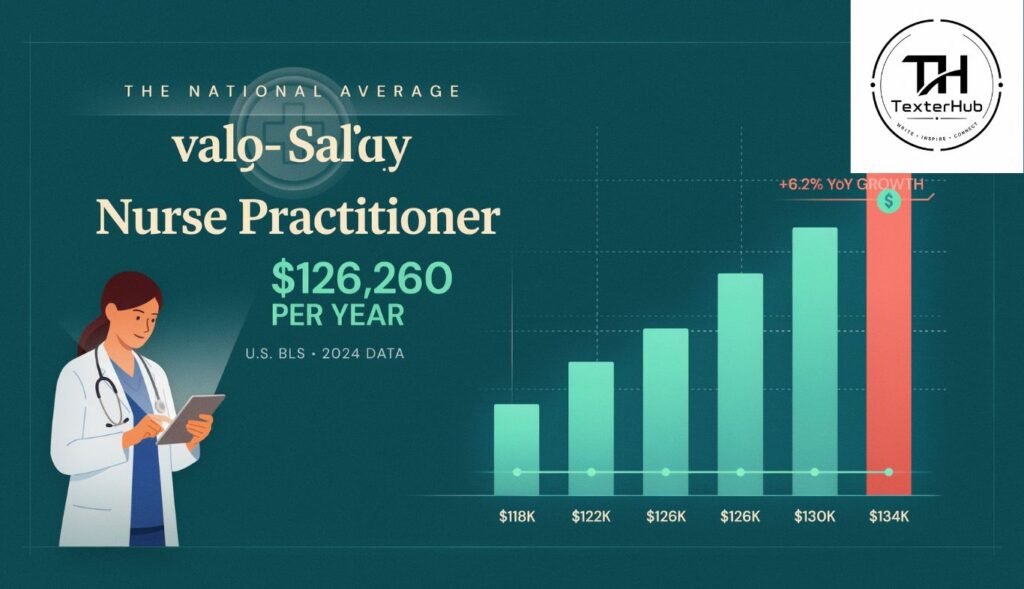
Let’s start with the number most people actually want. According to the U.S. Nurse Practitioner Salary Bureau of Labor Statistics, the median nurse practitioner annual income sits at roughly $129,210 per year, based on the most recent Occupational Employment and Wage Statistics release. That works out to a nurse practitioner hourly wage of about $62, and a nurse practitioner monthly salary near $10,770 before taxes.
It’s worth noting that different data sources report slightly different figures. Nurse Practitioner Salary Some staffing and payroll platforms put the average nurse practitioner salary closer to $137,000 when averaging across all reporting NPs rather than reporting the median, since a smaller group of very high earners pulls the average upward. The median, which represents the midpoint of all reported salaries, tends to be the more realistic anchor for what a typical NP actually takes home.
Even NPs at the lower end of the pay scale are doing fairly well compared to the broader workforce. The bottom ten percent of earners report nurse practitioner earnings around $98,000 annually, while the top ten percent report figures north of $170,000. That’s a wide band, and almost every factor we cover below — specialty, state, experience, and employer type — plays a role in where any individual NP lands within it.
Compared to a Registered Nurse (RN), whose median pay hovers around $90,000, the jump to NP status represents a meaningful bump in nurse practitioner compensation. That gap reflects the additional years of schooling, the cost of an MSN or DNP program, and the added clinical responsibility that comes with independent patient care decisions.
Entry-Level vs. Experienced Nurse Practitioner Salary
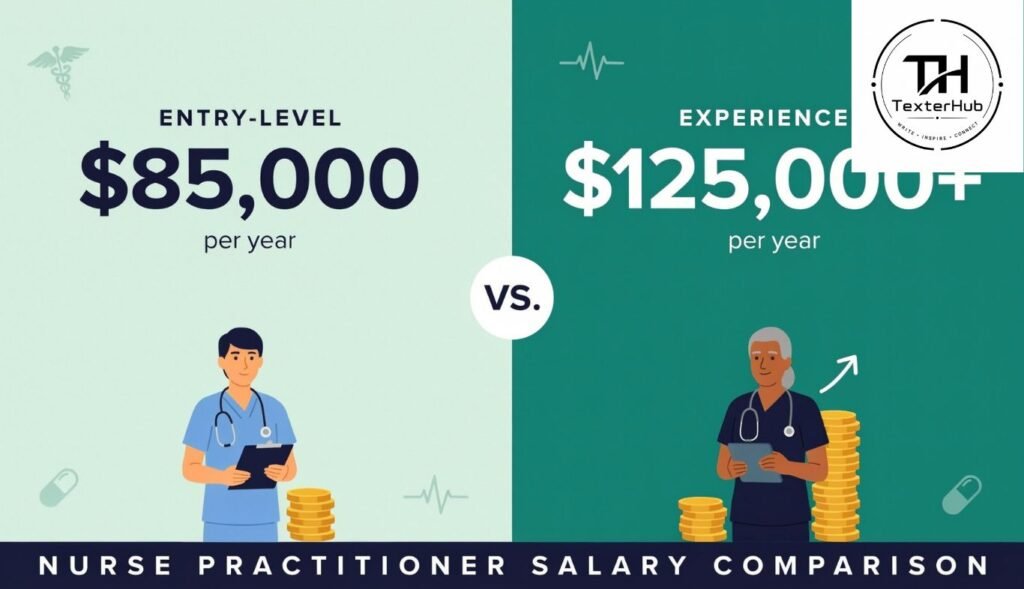
New graduates naturally earn less than NPs who have spent a decade building clinical experience. The typical entry-level nurse practitioner salary for someone just off their board certification exam lands around $87,000 to $95,000 per year, depending on region and specialty. Many new grads take on a formal fellowship or residency program during their first year, which can temporarily lower pay in exchange for structured mentorship.
Once that first year or two is behind them, pay tends to climb fairly quickly. Salary by experience is one of the clearest patterns in NP compensation data — NPs with five to nine years of practice typically report earnings close to the national median, while those with ten or more years often clear $140,000 to $160,000, particularly in high-demand specialties or high-cost states.
The experienced nurse practitioner salary ceiling depends a lot on whether someone stays in direct patient care or moves into leadership, education, or ownership of a private clinic. NPs who open their own practice in a full-practice-authority state, or who take on administrative responsibility over a clinical team, often see the largest jumps in total earnings later in their careers.
Nurse Practitioner Salary by Specialty
This is where the numbers start to spread out quite a bit, and it’s one of the most common searches related to NP salary. Specialty choice affects both the base pay and the demand curve, since some specialties face more acute staffing shortages than others.
Family Nurse Practitioner Salary
The Family Nurse Practitioner (FNP) is the most common specialty, and family nurse practitioner salary figures typically land in the $105,000 to $120,000 range annually. FNPs work across the lifespan in primary care settings, which keeps demand steady but doesn’t always command the premium that narrower specialties do. Because FNPs are the largest pool of NPs, this specialty also has the most job openings nationally.
Psychiatric Nurse Practitioner Salary
Mental health has become one of the highest-paying corners of the field. Psychiatric nurse practitioner salary figures for the Psychiatric Mental Health Nurse Practitioner (PMHNP) role often reach $140,000 to $145,000, and in some markets go higher still. This reflects a severe national shortage of mental health prescribers, combined with growing demand for outpatient and telehealth psychiatric services.
Pediatric Nurse Practitioner Salary
Pediatric nurse practitioner salary figures for the Pediatric Nurse Practitioner (PNP) role tend to run a bit below the national median, often in the $100,000 to $115,000 band. Pediatric care generally reimburses at lower rates than adult or specialty medicine, which shows up directly in pay, even though demand for pediatric providers remains strong in most regions.
Acute Care Nurse Practitioner Salary
Acute care nurse practitioner salary figures for the Acute Care Nurse Practitioner (ACNP) role usually sit above the FNP median, frequently in the $115,000 to $135,000 range, since acute care NPs work in hospitals managing more medically complex patients. Related roles like the Adult-Gerontology Nurse Practitioner (AGNP) follow a similar pattern, with pay shaped heavily by inpatient versus outpatient placement.
Other High-Paying Specialties
A handful of other tracks round out the higher end of the pay scale. The Neonatal Nurse Practitioner (NNP), who cares for critically ill newborns, often earns between $130,000 and $150,000 given the intensity and specialization of NICU work. The Women’s Health Nurse Practitioner (WHNP) typically earns closer to the FNP range, while the Emergency Nurse Practitioner (ENP) frequently earns a premium tied to shift work and the acuity of emergency department patients. Critical care and cardiology NPs also tend to rank near the top, with some reports placing critical care pay above $170,000 in competitive markets.
A quick nurse practitioner salary comparison across specialties makes one thing clear: the further a role moves toward acute, critical, or mental health care, the higher the ceiling tends to be, while primary care and pediatric roles offer more stability but a lower top end.
Nurse Practitioner Salary by State
Geography might be the single biggest lever on pay, even more than specialty in some cases. Nurse practitioner salary by state data from the BLS consistently puts California, Nevada, Washington, New Jersey, and Oregon at the top of the list, with average annual pay in several of these states climbing well above $145,000 and, in California’s case, sometimes reported above $160,000.
At the other end, states like Alabama, Tennessee, and parts of the Midwest report averages closer to $110,000 to $120,000. These are still solid, above-average incomes for the region, but they illustrate how much of a swing exists between the highest and lowest paying states for nurse practitioners nationally.
It’s tempting to chase the highest number on a map, but cost of living deserves equal weight in that decision. A nurse practitioner salary by state figure of $170,000 in California buys noticeably less than a $120,000 salary in a state with cheaper housing and lower taxes. Anyone weighing a relocation for pay reasons should run the numbers through a cost-of-living calculator before assuming the bigger number wins.
State licensure rules also shape pay indirectly. States that grant full practice authority tend to have more NP-led clinics and a more competitive hiring market, which can push wages upward. States with reduced or restricted practice, where a supervising physician agreement is required, sometimes see slightly suppressed pay because employers factor in the added administrative or collaborative cost.
Nurse Practitioner Salary by Employer and Setting
Where an NP works matters almost as much as what specialty they practice. Hospital nurse practitioner salary figures tend to run slightly above the national median, largely because hospital-employed NPs often handle higher-acuity patients and may qualify for shift differential pay for nights, weekends, or holidays.
Private practice nurse practitioner salary figures vary more widely, since a small independent clinic may pay less in base salary but offer profit-sharing or ownership potential down the road. Physician-owned group practices often land in the middle of the pack, while large multi-specialty groups tend to offer more standardized, predictable pay scales.
Urgent care and emergency nurse practitioner salary figures often include a premium tied to unpredictable hours and higher patient volume. Government employment, including the VA and public health systems, is worth a special mention here too — while the base pay is sometimes slightly below private sector numbers, the retirement benefits and job security frequently make total compensation competitive or even superior over a full career.
Telehealth nurse practitioner salary has become its own category worth tracking, especially since the pandemic accelerated adoption of telemedicine across primary care and psychiatry. Remote roles can pay hourly rates comparable to in-person work, and they offer flexibility that appeals to NPs balancing family responsibilities or living in rural areas without local specialty demand. Locum tenens and contract telehealth positions in particular can pay $80 to $125 per hour for the right specialty and availability.
An outpatient clinic setting generally offers more predictable hours than hospital employment, though the trade-off is usually a lower overall ceiling on pay. NPs choosing between these settings often weigh lifestyle and work-life balance just as heavily as the raw salary number.
Full-Time vs. Part-Time Nurse Practitioner Pay
Not every NP works a traditional forty-hour week, and pay structures reflect that. A full-time nurse practitioner typically earns an annual salary with benefits attached, while a part-time nurse practitioner is more often paid hourly, without the full benefits package that comes with full-time status.
Interestingly, part-time and per-diem NP roles sometimes pay a higher effective hourly rate to compensate for the lack of employee benefits. This arrangement appeals to NPs who are semi-retired, raising young children, or supplementing a primary job with occasional shifts elsewhere. It’s a useful option worth considering for anyone trying to balance income against flexibility rather than chasing the single highest salary figure available.
Education, Certification, and Their Effect on Pay
The path into this profession runs through nurse practitioner certification, which requires graduating from an accredited MSN or DNP program and passing a national board exam through organizations like the AANP or ANCC. State licensure is granted after certification and must be maintained through continuing education credits, which vary by state but generally run every one to two years.
There’s an ongoing debate in nursing education about whether a DNP delivers a meaningful pay bump over an MSN. In practice, the difference tends to be modest in direct salary terms, though DNP holders are often better positioned for leadership, teaching, or research roles that carry their own compensation structures. Professional development through certifications in a subspecialty, such as psychiatric or cardiology credentialing, tends to move the needle more than the degree type alone.
Nurse Practitioner Benefits Beyond the Base Salary
Base pay only tells part of the story. Nurse practitioner benefits often add tens of thousands of dollars in value on top of the salary figure quoted in a job posting. Health insurance, paid time off, and retirement benefits such as 401(k) matching are standard at most hospitals and larger group practices.
Government and academic employers frequently offer more generous benefits packages than private practice, even when the base salary looks lower on paper. One salary survey found that total compensation, including benefits, can run $50,000 to $75,000 higher than base pay alone once retirement contributions and insurance value are factored in, which is a significant gap worth asking about during any interview process.
A signing bonus has become increasingly common as employers compete for a limited pool of experienced NPs, particularly in rural or underserved areas. Bonuses in the $5,000 to $20,000 range aren’t unusual for hard-to-fill positions, sometimes paired with relocation assistance or student loan repayment as an added incentive.
Overtime pay and shift differential also matter for NPs working in hospital or urgent care settings. Weekend, night, and holiday shifts frequently carry a pay premium, which can meaningfully boost annual nurse practitioner income for those willing to take less desirable hours.
Salary Negotiation Tips for Nurse Practitioners
Many new NPs accept the first offer they receive, which often leaves money on the table. Salary negotiation starts with research — knowing the median pay for your specialty and region gives you a factual anchor rather than a guess when a recruiter asks about salary expectations.
It also helps to negotiate the full package rather than just the base number. Asking about signing bonus eligibility, continuing education stipends, or additional paid time off can sometimes yield more value than pushing on salary alone, especially at organizations with fixed pay bands. Experienced NPs with a track record in a high-demand specialty typically have the most leverage, particularly in states facing provider shortages.
Timing matters too. Positions in psychiatric care, rural primary care, or acute specialties tend to sit open longer, which shifts negotiating power toward the candidate. Coming prepared with data on the average nurse practitioner salary for your specific specialty and state puts you in a much stronger position than negotiating from instinct alone.
Nurse Practitioner Job Outlook
Pay is only half the equation — job security matters just as much for anyone weighing this healthcare career. According to the Bureau of Labor Statistics, employment for nurse practitioners, along with nurse anesthetists and nurse midwives, is projected to grow around 40 percent between 2024 and 2034, making it one of the fastest-growing occupations tracked in the entire economy.
That growth translates into more than 30,000 new openings projected each year through the next decade, driven largely by an aging population, a growing prevalence of chronic disease, and an ongoing shortage of primary care physicians in many parts of the country. The nurse practitioner job outlook currently ranks among the strongest of any profession in the healthcare industry, healthcare or otherwise, which helps explain why NP programs have seen a steady rise in enrollment over the past several years.
This strong employment outlook also feeds back into pay. As demand for NPs outpaces the supply of newly certified graduates in certain specialties and regions, employers have had to raise starting offers and improve benefits packages just to remain competitive in hiring. That dynamic is likely to continue as more states expand prescribing authority and full practice rights for NPs.
How NP Pay Compares to Other Healthcare Roles
It’s useful to place NP salary next to other roles in the same broad category. The advanced practice registered nurse salary umbrella also includes nurse anesthetists and nurse midwives, and APRN salary figures vary widely by role — nurse anesthetists, for instance, typically out-earn NPs significantly due to the specialized nature of anesthesia work, while nurse midwives often report pay closer to or slightly below the NP median.
Compared to physician assistants, NP pay tends to run fairly close, with the specific numbers depending heavily on specialty and location for both professions. Against the broader category of healthcare professional salary data, NPs consistently rank in the upper tier, reflecting both the advanced education required and the growing scope of independent practice many states now allow.
Final Thoughts
Nurse practitioner pay has genuinely improved over the past several years, driven by growing demand, an aging population, and an expanding scope of practice in most states. Whether someone lands closer to the entry-level end or the experienced top of the range depends on a mix of specialty, location, employer type, and negotiation — not any single factor alone.
For anyone weighing whether to pursue this path, the combination of strong median pay, a fast-growing job market, and meaningful benefits makes a solid case. As with any career decision, it’s worth digging past the headline number and looking at the full picture, including benefits, cost of living, and long-term growth potential, before making the leap.
FAQs
Is nurse practitioner a good career financially?
Yes, by most measures. Median pay sits well above the national average across all occupations, job growth is among the strongest in the country, and the benefits packages attached to most full-time roles add substantial value beyond the base salary.
Which state pays nurse practitioners the most?
California consistently reports the highest average pay, followed closely by states like Nevada, Washington, New Jersey, and Oregon. Cost of living in these states is also higher, so take-home value should be weighed alongside the sticker price.
Which NP specialty pays the best?
Psychiatric and neonatal specialties tend to sit at the top of the pay scale, along with critical care and cardiology roles, largely due to the intensity of the work and persistent staffing shortages in those areas.
Do NPs get paid more than RNs?
Generally, yes, and the gap is significant. The added graduate education, board certification, and expanded scope of practice that come with the NP role typically translate into tens of thousands of dollars more per year compared to RN pay.